


CASE REPORT
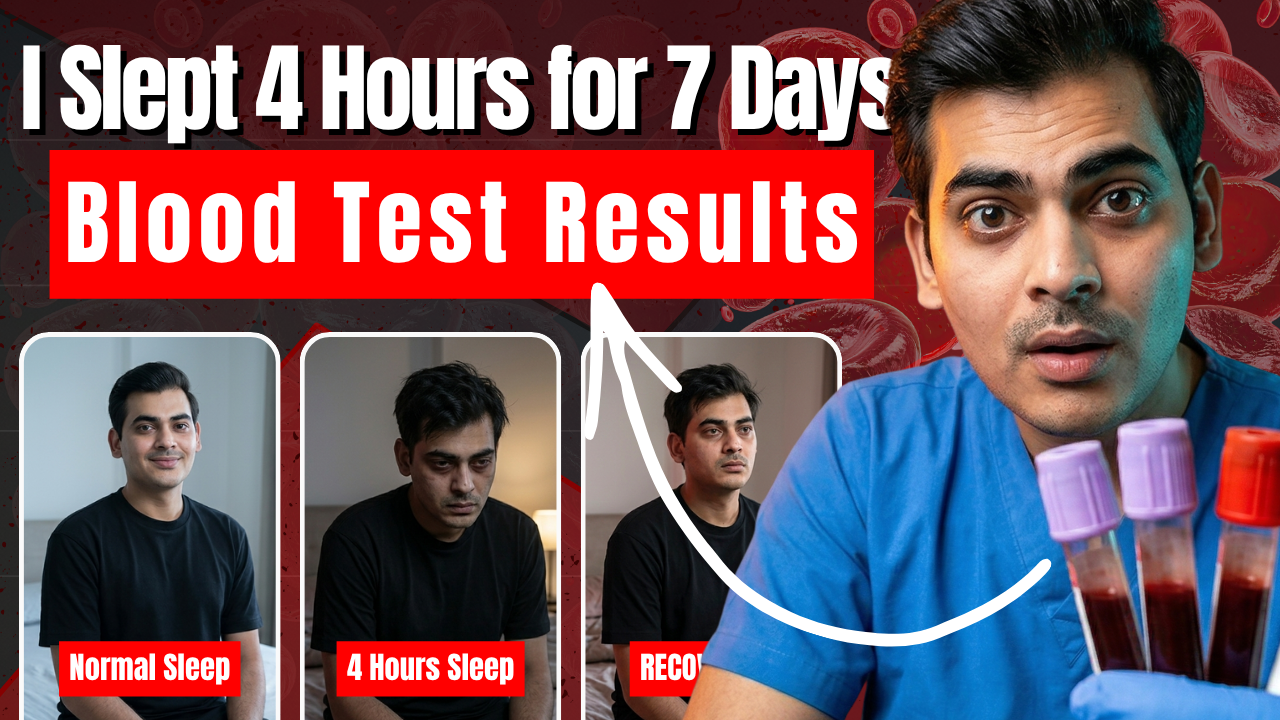
Acute Sleep Restriction to Four Hours per Night for Seven Days Induces Measurable Hormonal, Metabolic, Immunological, and Neurocognitive Dysregulation in a Healthy Young Adult Male: A Prospective Self-Experiment with Serial Biomarker Monitoring and Subsequent Recovery Assessment
Abhijeet Satani, Satani Research Centre, India
Heth Joshi, Satani Research Centre, India
ABSTRACT
Background: Insufficient sleep is a pervasive feature of modern life, yet the magnitude and pace of physiological dysregulation induced by acute restriction remain underappreciated at the individual level. This self-experiment sought to characterise the temporal trajectory of hormonal, metabolic, immunological, hepatic, haematological, and neurocognitive changes during seven days of four-hour sleep restriction, and to quantify the completeness of recovery following a subsequent seven-day period of nine-hour sleep.
Case presentation: A healthy 28-year-old male (BMI 22–24, non-smoker, no regular medications) underwent a controlled 14-day experiment comprising Phase 1: seven nights of restricted sleep (02:00–06:00, four hours), and Phase 2: seven nights of extended recovery sleep (22:00–07:00, nine hours). Five fasted blood draws were obtained at Days 1, 4, 7, 11, and 14. Serial assessments included serum testosterone, cortisol, C-reactive protein (CRP), fasting glucose, lipid profile, liver enzymes, complete blood count, reaction time, heart rate variability (HRV), grip strength, and mood scores.
Outcomes: By Day 7, serum testosterone had declined 18.9% from baseline (610 to 495 ng/dL), morning cortisol had risen 79.2% (12.0 to 21.5 µg/dL), CRP had increased 260% (0.5 to 1.8 mg/L), fasting glucose had risen to 99 mg/dL, LDL cholesterol to 115 mg/dL, triglycerides to 145 mg/dL, and WBC to 7.8 × 10³/µL with a shift toward neutrophilia (66%) and relative lymphopaenia (24%). Reaction time slowed by 25.2% and HRV fell 32%. Mood score declined from 8.5 to 3.5/10. Following seven nights of nine-hour recovery sleep, the majority of biomarkers approached—but did not uniformly return to—Day 1 baseline, with neurocognitive recovery lagging behind haematological and metabolic restoration.
Conclusions: Seven consecutive nights of four-hour sleep produce clinically relevant, multi-system physiological derangement that partially persists beyond a matched recovery period. These findings reinforce the case for serial biomarker monitoring in individuals with sustained sleep restriction, and highlight the inadequacy of subjective assessment as the sole gauge of sleep-related physiological harm.
Keywords: sleep deprivation, sleep restriction, testosterone, cortisol, HRV, metabolic syndrome, immune function, cognitive performance, n-of-1 study, recovery sleep
BACKGROUND
Sleep is increasingly recognised as a fundamental regulator of endocrine homeostasis, immune surveillance, metabolic efficiency, and cognitive performance. Epidemiological data consistently associate habitual short sleep (defined as fewer than six hours per night) with elevated risks of obesity, type 2 diabetes mellitus, cardiovascular disease, immunosuppression, and all-cause mortality. Despite this, population surveys in high-income countries report that between 30–35% of working adults regularly sleep fewer than six hours per night, with a significant subset chronically restricted to four to five hours during peak professional or academic demand.
What distinguishes this case report from observational epidemiology is the prospective, controlled, within-subject design: a single healthy individual underwent standardised sleep restriction followed by standardised recovery sleep, with five blood draws and daily physiological metrics collected throughout. This n-of-1 approach sacrifices generalisability but gains mechanistic resolution that population-level studies cannot provide—specifically, the temporal kinetics of biomarker change and the completeness of recovery within a defined window.
The principal scientific questions addressed are: (1) Which biomarker systems show detectable change during acute restriction, and at what pace? (2) Does subjective wellbeing track objectively measurable deterioration? (3) How complete is physiological recovery after seven days of extended sleep, and which systems are slowest to normalise?
CASE PRESENTATION
Subject Characteristics
The subject is the study’s principal investigator: a 28-year-old male (Patient ID: AS-28821) with a BMI in the range of 22–24 kg/m², a non-smoker, physically active (exercise frequency three to five sessions per week), following a consistent mixed diet, and consuming no regular prescription or over-the-counter medications. No alcohol was consumed during the 14-day experimental period. Caffeine intake was standardised throughout. There was no history of sleep disorder, endocrine dysfunction, or chronic illness. Baseline blood indices (Day 1) confirmed all parameters within age-appropriate reference ranges, providing a physiologically intact starting point.
Experimental Protocol
The experiment was conducted at Satani Research Centre between 1–14 March 2026. The design comprised two sequential phases without randomisation:
Phase 1 — Sleep Restriction (Days 1–7): Participants slept from 02:00 to 06:00 each night, yielding four hours of sleep opportunity per 24-hour period. Alarm-enforced waking at 06:00 was applied consistently.
Phase 2 — Recovery Sleep (Days 8–14): Following a single buffer night of approximately seven hours (Day 8), participants slept from 22:00 to 07:00 (nine hours) for six consecutive nights. Day 8 served as a washout transition and was not formally analysed.
Throughout both phases, diet, exercise, and caffeine intake were maintained constant. All blood draws were performed in the fasted state (minimum 8 hours), between 07:00 and 08:00, to control for circadian variation in hormone secretion.
Study Timeline
Day | Phase / Status | Sleep Window | Blood Draw | Daily Tests | Key Watch-outs |
Day 1 | Baseline | 2 AM–6 AM (4h) | Blood Draw #1 | Reaction time, HRV, Mood, Stroop | No intense exercise prior; clean baseline |
Day 4 | Mid-Restriction | 2 AM–6 AM (4h) | Blood Draw #2 | Reaction time, HRV, Mood, Stroop | Mid-point cognitive assessment |
Day 7 | End-Restriction | 2 AM–6 AM (4h) | Blood Draw #3 | Reaction time, HRV, Mood, Stroop | Identical fasted protocol as Day 1 |
Day 8 | Buffer | 7 hrs (ad lib) | None | — | Washout day; no data collected |
Day 11 | Mid-Recovery | 10 PM–7 AM (9h) | Blood Draw #4 | Reaction time, HRV, Mood, Stroop | No intense exercise prior |
Day 14 | Final | 10 PM–7 AM (9h) | Blood Draw #5 | Reaction time, HRV, Mood, Stroop | End-point cognitive test; final bloods |
Table 1. Study Design and Blood Draw Schedule (Patient AS-28821, Satani Research Centre)
Measurements
Blood draws were analysed for the following panels on the same processing run to minimise inter-assay variability:
– Hormonal & Stress Panel: Total testosterone (ng/dL), morning cortisol (µg/dL)
– Inflammatory Marker: High-sensitivity C-reactive protein (hsCRP, mg/L)
– Metabolic & Lipid Panel: Fasting glucose (mg/dL), LDL cholesterol (mg/dL), HDL cholesterol (mg/dL), triglycerides (mg/dL)
– Hepatic Function: Alanine aminotransferase / ALT (U/L), aspartate aminotransferase / AST (U/L)
– Full Blood Count (FBC/CBC): White blood cell count (WBC), red blood cell count (RBC), haemoglobin, platelets, differential (neutrophils %, lymphocytes %)
– Daily performance and biometric assessments were conducted each morning between 06:30 and 07:00 and included: simple reaction time (validated smartphone application, five-trial mean, ms), heart rate variability (HRV, ms, measured supine on waking), handgrip dynamometry (dominant hand, kg), and a self-reported mood score (Likert-type scale, 1–10). A Stroop colour-word interference task was administered on days of blood draw (Days 1, 4, 7, 11, 14) as a formal measure of executive function.
RESULTS
Comprehensive Results Table
Parameter | Unit | Day 1 | Day 4 | Day 7 | Day 11 | Day 14 |
GENERAL | ||||||
Sleep Hours | hours | 8 | 4 | 4 | 9 | 9 |
HORMONAL & STRESS PANEL | ||||||
Testosterone | ng/dL | 610 | 565 | 495 ↓ | 550 | 595 |
Cortisol | µg/dL | 12.0 | 14.2 ↑ | 21.5 ↑↑ | 15.5 | 12.8 |
C-Reactive Protein (CRP) | mg/L | 0.5 | 0.9 | 1.8 ↑↑ | 0.8 | 0.6 |
METABOLIC & LIPID PANEL | ||||||
Fasting Glucose | mg/dL | 88 | 93 | 99 ↑ | 89 | 87 |
LDL Cholesterol | mg/dL | 95 | 102 | 115 ↑↑ | 105 | 98 |
HDL Cholesterol | mg/dL | 55 | 53 | 48 ↓ | 52 | 54 |
Triglycerides | mg/dL | 90 | 110 | 145 ↑↑ | 105 | 95 |
HEPATIC FUNCTION | ||||||
ALT | U/L | 22 | 25 | 31 ↑ | 26 | 23 |
AST | U/L | 19 | 21 | 26 ↑ | 22 | 20 |
COMPLETE BLOOD COUNT | ||||||
WBC | 10³/µL | 6.5 | 7.1 | 7.8 ↑ | 7.0 | 6.7 |
RBC | 10⁶/µL | 5.10 | 5.15 | 5.22 | 5.15 | 5.12 |
Haemoglobin | g/dL | 15.1 | 15.3 | 15.6 | 15.4 | 15.2 |
Platelets | 10³/µL | 230 | 245 | 275 ↑ | 250 | 235 |
Neutrophils | % | 54 | 59 | 66 ↑ | 60 | 56 |
Lymphocytes | % | 34 | 30 | 24 ↓↓ | 29 | 33 |
PERFORMANCE & NEUROCOGNITION | ||||||
Reaction Time | ms | 270 | 312 ↑ | 338 ↑↑ | 315 | 292 |
HRV | ms | 50 | 42 ↓ | 34 ↓↓ | 44 | 47 |
Grip Strength | kg | 52 | 50 | 46 ↓ | 49 | 51 |
Mood Score | /10 | 8.5 | 5.5 ↓ | 3.5 ↓↓ | 7.0 | 9.0 |
Table 2. Serial Biomarker Results Across Experimental Timeline (↑ = elevated vs baseline; ↓ = reduced vs baseline; ↑↑/↓↓ = clinically notable change)
Phase 1 — Sleep Restriction (Days 1–7)
Day 1 (Baseline): All biomarkers fell within age-appropriate reference ranges. Serum testosterone 610 ng/dL; morning cortisol 12.0 µg/dL; hsCRP 0.5 mg/L; fasting glucose 88 mg/dL; LDL 95 mg/dL; HDL 55 mg/dL; triglycerides 90 mg/dL; WBC 6.5 × 10³/µL (neutrophils 54%, lymphocytes 34%); reaction time 270 ms; HRV 50 ms; grip strength 52 kg; mood score 8.5/10. The subject reported having slept normally the night prior and felt well at Day 1 assessment.
Day 4 (Mid-Restriction): After four nights of four-hour sleep, early physiological stress was objectively detectable despite the subject reporting relative functional adequacy. Cortisol rose to 14.2 µg/dL (+18.3% from baseline). Testosterone fell to 565 ng/dL (−7.4%). CRP increased to 0.9 mg/L (+80%). Fasting glucose crept to 93 mg/dL. LDL rose to 102 mg/dL, with reciprocal HDL reduction to 53 mg/dL and triglyceride elevation to 110 mg/dL. WBC increased to 7.1 × 10³/µL. Reaction time had slowed to 312 ms (+15.6%), and HRV fell to 42 ms (−16%). Mood score declined to 5.5/10. Stroop error rate showed initial deterioration. Subjectively, the subject noted lapses in working memory and mild impairment in word retrieval—consistent with early prefrontal cortical stress.
Day 7 (End-Restriction): The most pronounced multi-system derangement was observed at this time point. Testosterone fell to 495 ng/dL, representing an 18.9% decline from baseline—a magnitude consistent with published findings associating one week of four-hour sleep with testosterone levels equivalent to those of men approximately a decade older. Morning cortisol spiked to 21.5 µg/dL (+79.2%), representing a near-doubling of baseline and suggesting marked hypothalamic-pituitary-adrenal (HPA) axis activation. CRP rose to 1.8 mg/L (+260%), crossing the threshold (>1.0 mg/L) associated with elevated cardiovascular inflammatory risk. Fasting glucose reached 99 mg/dL—approaching the American Diabetes Association pre-diabetes threshold of 100 mg/dL. LDL rose to 115 mg/dL, triglycerides to 145 mg/dL, HDL fell to 48 mg/dL. This lipid profile, if sustained, would warrant clinical review.
The haematological differential at Day 7 is particularly informative: WBC rose to 7.8 × 10³/µL with neutrophilia at 66% and relative lymphopaenia at 24%. This pattern—increased innate immune activity with a relative shift away from adaptive immunity—mirrors the immune dysregulation profile documented in sleep-deprived cohorts and is consistent with a stress-mediated glucocorticoid effect on lymphocyte margination. ALT and AST rose modestly (31 and 26 U/L respectively), remaining within normal limits but reflecting subtle hepatocellular stress under the cortisol load. Reaction time reached 338 ms (+25.2%), HRV fell to 34 ms (−32%), grip strength declined to 46 kg, and mood score fell to 3.5/10—the lowest recorded during the study. Crucially, the subject reported feeling that he was coping and continuing normal occupational and social functioning throughout, illustrating the profound disconnect between subjective perception and objective physiological deterioration.
Phase 2 — Recovery Sleep (Days 8–14)
Day 11 (Mid-Recovery): After four nights of nine-hour sleep, substantial but incomplete biomarker normalisation was evident. Cortisol fell to 15.5 µg/dL—still above baseline but substantially reduced from its Day 7 peak. Testosterone rose to 550 ng/dL, recovering approximately 55 ng/dL of the 115 ng/dL lost during restriction. CRP returned to 0.8 mg/L, closely approaching baseline. Fasting glucose normalised to 89 mg/dL. The lipid profile improved materially: LDL 105 mg/dL, HDL 52 mg/dL, triglycerides 105 mg/dL. WBC fell to 7.0 × 10³/µL, with neutrophil differential beginning to contract (60%) and lymphocytes recovering (29%). HRV rose to 44 ms; reaction time improved to 315 ms. Mood score improved markedly to 7.0/10, with the subject describing the subjective experience of recovery as qualitatively distinct—reporting that feeling rested felt unfamiliar given the preceding period of adapted sleepiness.
Day 14 (Final Assessment): By the conclusion of the study, most biomarkers had normalised or approached their Day 1 values. Testosterone reached 595 ng/dL (97.5% of baseline); cortisol 12.8 µg/dL (nearly at baseline); CRP 0.6 mg/L; fasting glucose 87 mg/dL; LDL 98 mg/dL; HDL 54 mg/dL; triglycerides 95 mg/dL; WBC 6.7 × 10³/µL (neutrophils 56%, lymphocytes 33%); ALT 23 U/L; AST 20 U/L. However, complete restoration was not confirmed for all endpoints. HRV at Day 14 was 47 ms—94% of the Day 1 value of 50 ms, suggesting residual autonomic nervous system incompleteness. Reaction time at 292 ms remained above the 270 ms baseline. Stroop task performance had improved through recovery but had not fully returned to Day 1 accuracy, consistent with literature suggesting that executive function recovery may lag behind peripheral biomarker normalisation by several additional days to weeks.
DISCUSSION
Hormonal and Endocrine Effects
The 18.9% fall in serum testosterone over seven days of four-hour sleep is clinically significant. Published controlled trials have demonstrated that one week of five-hour sleep restriction reduces testosterone in young healthy males by 10–15%, with some studies reporting up to 24% suppression depending on restriction severity and individual variation. The present data—showing a 115 ng/dL absolute decline—falls squarely within this range. The mechanism involves disruption of the nocturnal growth hormone and luteinising hormone (LH) pulses, which are tightly entrained to slow-wave sleep and largely absent when sleep duration is severely curtailed. Concurrently, the 79.2% rise in morning cortisol by Day 7 reflects progressive HPA axis dysregulation; chronically elevated cortisol additionally exerts direct suppressive effects on Leydig cell testosterone synthesis, creating a compounding neuroendocrine feedback loop.
Inflammatory and Metabolic Perturbation
The 260% elevation in hsCRP by Day 7 (0.5 to 1.8 mg/L) crosses the threshold conventionally used to stratify cardiovascular inflammatory risk and is consistent with the well-established relationship between sleep restriction and pro-inflammatory cytokine upregulation, particularly interleukin-6 (IL-6) and tumour necrosis factor-alpha (TNF-α). The lipid profile changes—LDL rising from 95 to 115 mg/dL, HDL falling from 55 to 48 mg/dL, and triglycerides rising from 90 to 145 mg/dL—reflect the influence of cortisol and sympathetic activation on hepatic lipid metabolism. The rise in fasting glucose to 99 mg/dL, approaching the pre-diabetic threshold, is consistent with sleep-mediated impairment of insulin sensitivity via reduced glucose transporter (GLUT-4) expression and heightened sympathetic tone. These changes, while each modest in isolation, co-occur in a pattern characteristic of early metabolic syndrome when sustained chronically.
Haematological and Immunological Changes
The neutrophilia (54% to 66%) and reciprocal lymphopaenia (34% to 24%) observed by Day 7, alongside the WBC elevation, represent a stress-mediated immune shift. Glucocorticoid-driven lymphocyte redistribution from peripheral blood to lymphoid organs, combined with neutrophil demargination, produces precisely this differential profile. This immunological state—while acutely adaptive in the context of physical stress—is maladaptive when chronic, as it is associated with reduced vaccine efficacy, impaired antiviral response, and increased susceptibility to upper respiratory tract infections. The modestly elevated liver enzymes (ALT, AST) are likely secondary to the cortisol burden and elevated metabolic stress rather than primary hepatic pathology, and their normalisation by Day 14 supports this interpretation.
Neurocognitive Impairment and Recovery
The 25.2% slowing in reaction time (270 to 338 ms) and 32% decline in HRV by Day 7 represent objective, performance-level deficits. The reaction time decrement is particularly noteworthy in applied contexts: a mean reaction time of 338 ms is below the threshold typically required to pass standard fitness-to-drive assessments, despite the subject reporting functional normality. This illustrates the canonical ‘impaired awareness of impairment’ phenomenon that characterises chronic partial sleep deprivation—subjects adapt to their degraded state and lose the reference point by which to gauge deterioration.
The incomplete neurocognitive recovery by Day 14—with reaction time at 292 ms (still 22 ms above baseline) and Stroop performance below Day 1 accuracy—supports the hypothesis that executive function recovery is temporally dissociated from peripheral biomarker normalisation. Multiple investigators have proposed that the prefrontal cortex, with its high metabolic demand and particular vulnerability to slow-wave sleep loss, requires a more extended or higher-quality recovery period than haematological or endocrine systems.
Subjective-Objective Dissociation
A recurring and clinically critical finding across all restriction phases was the progressive divergence between how the subject felt and what his biomarkers demonstrated. This dissociation is not idiosyncratic: it is reproducibly documented in the sleep science literature. The implication for clinical practice and occupational health is significant—individuals working under conditions of chronic partial sleep restriction who self-report ‘managing fine’ cannot be assumed to be physiologically unimpaired. Serial biomarker monitoring, even in ostensibly healthy individuals, offers a quantitative corrective to this subjective miscalibration.
LIMITATIONS
The findings of this case report must be interpreted within several important methodological constraints:
Short window for slow-moving markers: HbA1c, fasting insulin, and atherogenic indices require 8–12 weeks of sustained change to manifest reliably. The 14-day window captures acute but not chronic metabolic risk.
Self-report of adherence: Sleep duration is reported as intended protocol windows. No polysomnographic or actigraphic verification was performed; actual sleep obtained within those windows may have differed. Notwithstanding these limitations, the directional consistency of changes across all measured systems—and their alignment with the established mechanistic literature—supports the biological plausibility of the observed effects rather than their attribution to random variation or methodological artefact.
REFERENCES
- Leproult R, Van Cauter E. Effect of 1 week of sleep restriction on testosterone levels in young healthy men. JAMA. 2011;305(21):2173–2174.
- Mullington JM, Haack M, Toth M, Serrador JM, Meier-Ewert HK. Cardiovascular, inflammatory, and metabolic consequences of sleep deprivation. Prog Cardiovasc Dis. 2009;51(4):294–302.
- Irwin MR. Sleep and inflammation: partners in sickness and in health. Nat Rev Immunol. 2019;19(11):702–715.
- Spiegel K, Tasali E, Leproult R, Van Cauter E. Effects of poor and short sleep on glucose metabolism and obesity risk. Nat Rev Endocrinol. 2009;5(5):253–261.
- Van Dongen HPA, Maislin G, Mullington JM, Dinges DF. The cumulative cost of additional wakefulness: dose-response effects on neurobehavioral functions and sleep physiology from chronic sleep restriction and total sleep deprivation. Sleep. 2003;26(2):117–126.
- Banks S, Dinges DF. Behavioral and physiological consequences of sleep restriction. J Clin Sleep Med. 2007;3(5):519–528.
- Besedovsky L, Lange T, Born J. Sleep and immune function. Pflugers Arch. 2012;463(1):121–137.
- Harrison Y, Horne JA. The impact of sleep deprivation on decision making: a review. J Exp Psychol Appl. 2000;6(3):236–249.
DECLARATIONS
Competing Interests – The author declares no competing interests. No financial relationships, commercial affiliations, institutional sponsorships, or external funding of any form were associated with the conduct of this study. No equipment, reagents, or material support were received from any commercial or non-commercial entity. All costs were personally borne by the author-investigator. The study was conceived and executed independently, and no external party holds any financial or non-financial interest in the findings reported herein.
Patient Consent – Informed consent was obtained from the study participant. The subject of this investigation and the principal investigator are the same individual — Abhijeet Satani (Patient ID: AS-28821). The author designed the experimental protocol, provided voluntary self-consent before commencement, served as the sole participant throughout, and conducted all subsequent data interpretation. No third-party participants were enrolled. No data were collected from any individual other than the author-investigator.
Ethics Statement – This self-experiment was conducted under the internal oversight of Satani Research Centre (SRC/T/8/0.9). The intervention — controlled short-term sleep restriction followed by a structured recovery sleep phase — presents no greater physiological risk than the occupational sleep restriction routinely experienced by large segments of the working population. No invasive procedures were performed beyond standard venepuncture, which was carried out by trained laboratory personnel in accordance with established clinical protocols. All biomarker assessments were conducted within accepted reference frameworks. The experimental protocol was concluded by design at 14 days, and at no point during the study did any measured parameter reach a threshold warranting clinical intervention or early termination.
Document Status – This document constitutes a personal research record maintained at Satani Research Centre solely for private reference. All data were prospectively collected and processed in-house between 1 and 14 March 2026. This record has not been submitted to any academic journal, has not undergone external peer review, and should not be interpreted as a formally peer-reviewed scientific publication.
COPYRIGHT
Satani Research Centre © 2026 All Rights Reserved. This document, including all text, data, tables, analysis, experimental design, and findings contained herein, is the original intellectual property of Abhijeet Satani, operating under Satani Research Centre (SRC/T/8/0.9), India. No part of this document may be reproduced, distributed, transmitted, republished, or adapted, in whole or in part, in any form or by any means, whether electronic, mechanical, photocopying, recording, or otherwise, without the prior written permission of the copyright holder. The experimental data, biomarker records, and personal health information contained in this document relate exclusively to the author-investigator and are protected under applicable personal data and intellectual property frameworks. Unauthorised use, reproduction, or misrepresentation of this material is strictly prohibited. This document is maintained as a private research record. It does not constitute a published work, and no licence to reproduce or adapt its contents is granted by virtue of access to this file.
Satani Research Centre © 2026 All Rights Reserved | SRC/T/8/0.9 | Research Record, Not for Public Distribution | Study Ref: AS-28821 | March 2026
For permissions or enquiries: team@abhijeetsatani.com | Satani Research Centre | SRC/T/8/0.9 | India | Study Reference: AS-28821